THANK YOU FOR SUBSCRIBING
× 
Enterprise Security Mag Weekly Brief
Be first to read the latest tech news, Industry Leader's Insights, and CIO interviews of medium and large enterprises exclusively from Enterprise Security Mag
Enterprise Security Magazine

Hirsch
Unified Security. Limitless Possibilities.

 Mark Allen, CEO
Security today is more complex than ever. Organizations are managing fragmented systems across access control, video, perimeter protection, intrusion detection and identity, often spread across multiple vendors and environments. Hirsch eliminates that complexity.
With more than 45 years of federal-grade expertise, Hirsch delivers a unified security platform that unifies every layer of protection into a single, seamless system, giving organizations complete visibility, control and confidence – From Perimeter to Core.
“At Hirsch, we believe security should be simple to operate, not fragmented and difficult to manage,” says Mark Allen, CEO. “Our focus is on unifying everything into one platform so organizations can secure what matters most without added complexity.”
The Unified Security Ecosystem
How does Hirsch's unified security ecosystem integrate multiple security components into a single unified platform?
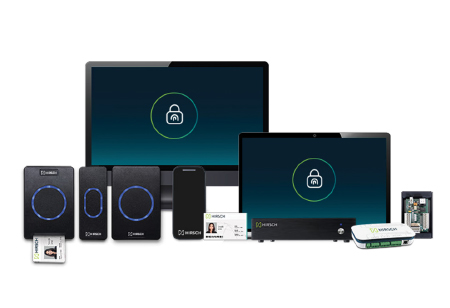 At the center of Hirsch’s innovation is Velocity Central, a unified situational platform that connects every critical component of physical security into a single centralized security management platform.
Velocity One connects:
• Perimeter protection and intrusion detection at the outer edge
• Physical access control systems managing secure entry
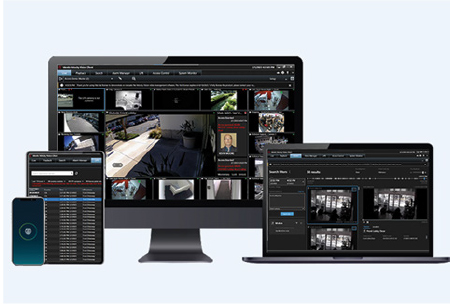
• Video intelligence delivering real-time visibility and insights
• Identity and credential technologies ensuring trusted access
Instead of managing separate systems, organizations gain a single platform, interface and source of truth.
“Security has traditionally been delivered as a collection of separate tools,” Allen explains. “Velocity Central changes that. It brings everything together into a single, cohesive solution that’s easier to manage and far more effective.”
This unified approach simplifies operations, reduces risk and enables faster, more informed decision-making across the entire security environment.
From Perimeter to Core, One Continuous System
Why is continuous integration across perimeter, access, and monitoring systems critical for security operations?
Traditional security systems operate in silos. Hirsch eliminates those gaps.
With Hirsch's unified solutions, security is designed as a continuous, connected solution, from the perimeter to the core.
Events detected at the edge can trigger actions across access control, video and monitoring systems in real time. Operators gain full situational awareness through a single interface, eliminating the need to switch between platforms or reconcile disconnected data.
This level of integration is critical for organizations operating in complex, high-security environments where speed, accuracy and reliability are essential.
“For our customers, it’s about having a complete picture in real time,” says Allen. “When every part of the system is connected, you can respond faster and with greater confidence.”
Designed for Real-World Environments
In what way does Hirsch support modernization across hybrid, cloud, and legacy infrastructure environments?
Security is not deployed in a vacuum. It exists across facilities, regions and legacy systems that have evolved.
Hirsch is built for that reality.
Designed with an open, flexible architecture that allows organizations to modernize at their own pace, whether on-premises, in the cloud, or in hybrid environments. Existing infrastructure can be integrated and extended without costly rip-and-replace approaches.
This flexibility is particularly important in regulated industries where compliance, uptime and operational continuity are essential. Hirsch enables organizations to strengthen security while maintaining stability — ensuring that modernization never comes at the expense of reliability.
Proven Across Mission-Critical Sites
Hirsch solutions are trusted worldwide across government, defense, critical infrastructure, healthcare, education and enterprise environments.
These are environments where security must perform without compromise — protecting people, assets and operations at all times.
From securing critical infrastructure and public institutions to enabling enterprise-scale operations, Hirsch delivers consistent performance across complex, distributed environments.
“Our customers operate in environments where failure isn’t an option,” Allen adds. “They need security that works every time, across every site. That’s what we’ve built our platform to deliver.”
 This real-world experience informs every aspect of the platform. Continuous feedback from customers, partners and high-security deployments – evolving in line with emerging threats and operational needs.
Built for What Comes Next
The future of physical security is unified, intelligent and increasingly connected to cybersecurity.
Organizations are moving away from isolated systems toward platforms that can adapt, integrate new technologies, support new workflows and respond dynamically to risk.
Hirsch is leading that shift.
Hirsch’s unified systems are designed to evolve alongside these changes, supporting advanced analytics, automation and open integrations that extend the platform’s value over time. As environments become more complex, Hirsch continues to simplify how security is managed — ensuring organizations remain in control without added burden.
Clarity. Control. Confidence.
At its core, Hirsch is built on a simple principle: security should enable organizations to operate with confidence, not complexity.
By unifying every layer of protection into one intelligent platform, Hirsch delivers clarity in visibility, control in operations and confidence in performance — across every environment it secures.
That commitment to unified security is why Hirsch is recognized as Physical Access Control Solutions of the Year 2026.
Trust at Scale: The New Standard in Physical Access Control
Physical access control has moved far beyond badge readers mounted beside doors. Enterprise security leaders now oversee environments where identity, network access, video intelligence and compliance frameworks intersect. Legacy systems built as isolated hardware installations struggle to meet this demand. Executives responsible for access control strategy must now account for cyber convergence, credential compromise, regulatory scrutiny and the expectation of uninterrupted availability across distributed facilities.
Over four decades, the industry has shifted from proprietary, command-line systems confined to security closets toward IP-centric, standards-based platforms. The most capable solutions no longer treat access control as a standalone function. They align identity management, video analytics, perimeter protection and enterprise IT frameworks within a unified architecture. This convergence supports centralized policy enforcement, coordinated response and enterprise-wide visibility rather than fragmented monitoring.
In this environment, identity assurance has become the anchor of effective access control. Password-based models have proven insufficient against phishing and credential compromise. Enterprise-grade platforms must support high-assurance credentials, multifactor authentication and policy-driven validation aligned to risk. That includes integration with government and industry standards, support for smart credentials, biometrics and cryptographic validation mechanisms, and the ability to extend authentication from physical entry points to network and data center access. Strong identity cannot be an add-on; it must underpin the entire security model.
Continuity is equally critical. Large organizations often operate a mix of legacy infrastructure and modern cloud services. Replacing entire systems in a single step introduces operational risk and budgetary strain. Leading platforms address this through open architecture and modular modernization, allowing phased migration without wholesale disruption. Hybrid deployment models, where some facilities remain on premise while others transition to cloud infrastructure, offer flexibility without surrendering centralized control. Unified policy management, credential governance, encryption standards and high availability across these environments separate mature platforms from incremental upgrades.
Enterprise buyers also face mounting regulatory obligations. Government agencies, critical infrastructure operators and highly regulated industries require systems designed for compliance, auditability and fault tolerance. Access control that fails during an outage or cannot demonstrate credential traceability undermines both security and governance. Solutions must therefore integrate strong auditing, secure software development practices and alignment with zero trust principles that extend from perimeter to core network assets.
The next phase of physical access control will be shaped by deeper cyber-physical integration, analytics-driven risk visibility and evolving permission models. Traditional role-based access is giving way to more dynamic approaches that evaluate qualifications, context and behavior. Platforms must be built to incorporate automation and advanced analytics while preserving usability and workflow efficiency. Investment in cryptographic agility and preparation for emerging computational threats will further distinguish forward-looking providers.
Hirsch stands out as a measured and disciplined choice in this landscape. Drawing on decades of innovation, it delivers a unified platform that integrates access control, video intelligence, perimeter protection and identity management within a single architecture. Its approach to passwordless smart credentials and multifactor authentication supports high-assurance standards while aligning with enterprise identity frameworks. Open architecture, phased modernization and hybrid deployment options allow organizations to evolve without operational disruption. For executives charged with safeguarding people, assets and data across complex environments, Hirsch represents a dependable, future-ready platform grounded in identity-driven security and sustained trust.
...Read more

Company
Hirsch
Management
Mark Allen, CEO
Description
Hirsch is a global leader in high-assurance physical and digital security for mission-critical environments. With over four decades of innovation, the company delivers unified access control, identity authentication and video intelligence solutions that protect government agencies, critical infrastructure and enterprise facilities.