
In an era where digital interconnectedness permeates every aspect of our lives, access control stands as a fundamental linchpin in safeguarding sensitive information, physical spaces, and digital assets. The concept of access control involves regulating and managing entry to resources, systems, or physical locations, emphasizing the need for a delicate balance between security measures and user convenience.
Access control measures are omnipresent, spanning various domains, from securing corporate networks and safeguarding personal data to controlling entry to buildings, facilities, and public spaces. The evolution of technology has propelled access control beyond traditional lock-and-key mechanisms to encompass sophisticated digital solutions, such as biometrics, smart cards, encryption, and multifactor authentication.
However, the challenge lies in striking a balance between stringent security measures and user convenience. Overly complex access control systems or stringent security protocols can sometimes hinder productivity, create friction in user experience, or impede seamless operations. The key is to implement access control solutions that prioritize security without compromising convenience for authorized users.
The emergence of user-friendly, yet highly secure, access control solutions is shaping the future of security systems. Innovations such as adaptive authentication, which dynamically assesses risk factors and adjusts security measures based on context, are revolutionizing access control by providing a more seamless user experience while maintaining robust security protocols.
Access control stands as a cornerstone in preserving security and protecting assets, whether digital or physical. Striking a harmonious balance between stringent security measures and user convenience is imperative in the evolving landscape of interconnected systems. By embracing innovative, adaptive, and user-centric access control solutions, organizations can fortify their security posture while ensuring a seamless and frictionless user experience in an increasingly connected world. Access control should not be viewed as an obstacle but as an enabler for security, efficiency, and convenience in our interconnected society.
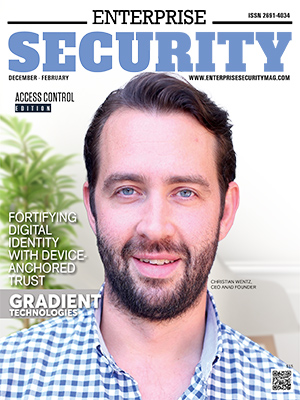
In this edition, we have featured Gradient Technologies. The company offers its Gradient Cybersecurity Mesh (GCM) Platform, a solution that eliminates the fundamentally insecure ways of identity management and authentication. It anchors credentials to the hardware of devices down to silicon levels and orchestrates them across multiple platforms and silos. Gradient puts users at the center of identity-based authentication, simplifies their experience, and executes a paradigm shift in how data, applications, and devices are accessed.